The Game That Was Cancelled, and the Hole It Left
Georgia and Florida A&M agreed to walk away from a 2028 game carrying a $650,000 guarantee. Neither side paid a penalty.
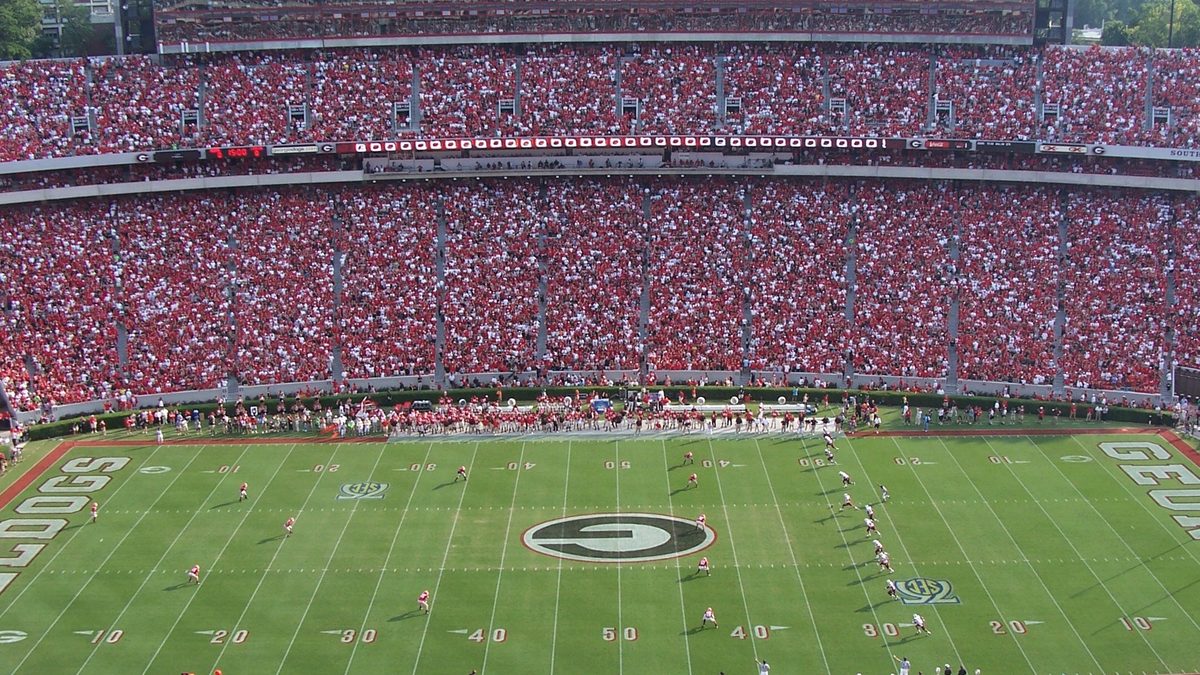
The contract had a clause for this. If Georgia backed out without mutual consent, it owed Florida A&M a cancellation fee matching the $650,000 guarantee.
The clause never triggered, because the two schools agreed to terminate. Mutual consent means no penalty is owed, and none was paid.
That is the whole transaction, and it is entirely ordinary contract law. What it left behind is the part worth reporting.
What Florida A&M lost
Georgia was the only known non-conference opponent on the Rattlers' 2028 schedule.
So the cancellation created two holes at once. A date with nothing in it, and $650,000 with nothing behind it — in a category of revenue that does not fund a football team so much as an entire athletic department.
Filling the date is a scheduling problem. Filling the money is a different problem, and the market for that money is contracting.
Why the market is contracting
The SEC moved to a nine-game conference schedule beginning in 2026. Its members now play at least ten games a year against power-conference opponents — nine in conference, plus a required non-conference game against another Power Four team or Notre Dame.
Every one of those slots used to be available to somebody.
At the same time, an expanded College Football Playoff makes strength of schedule matter more to the programs writing these checks. A guaranteed win over an FCS opponent is worth less on a playoff résumé than it was in a four-team era.
Those two changes point the same direction, and neither has anything to do with the quality of any HBCU program.
The scale of what is at stake
At least fifteen matchups between Division I HBCU programs and FBS opponents were scheduled for 2026, generating more than $6.9 million collectively.
Florida A&M sits at the top of that list — a reported $740,000 for its trip to Miami on September 10. Several programs are near $600,000. The Associated Press reported that high-profile matchups start around $500,000 and that games against Group of Six opponents pay closer to $250,000.
There are 127 FBS-FCS matchups on this season's calendar. More than twenty involve HBCUs.
What a cancellation is not
It is worth saying plainly: nothing in the public record suggests either school did anything improper. Contracts get renegotiated and terminated constantly in college scheduling, and a mutual termination is the least adversarial way that happens.
But a cancelled game is a real number leaving a real budget two years before anyone has to explain it. Those are the decisions that never make a headline in the year they are made, and are entirely visible in the year they land.
Contract terms and the mutual-termination detail as reported by HBCU Sports, July 2026. Guarantee figures as reported by HBCU Sports and the Associated Press; figures described as reported are not confirmed here from contracts.