She Said It Before the Game
Morgan State's athletic director described the end of the guarantee game five days before her team played one.
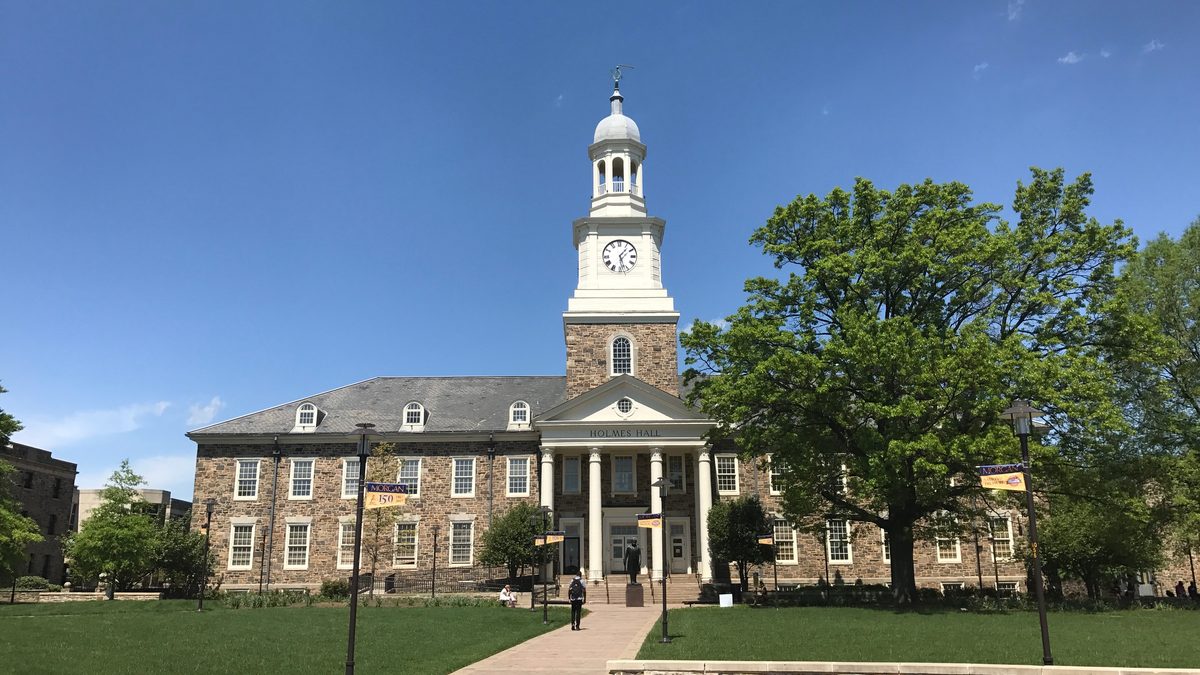
On September 1, Dena Freeman-Patton told the Associated Press that her department expects to schedule fewer of these matchups going forward — <cite index="44-1">"we're probably not playing very many of them in the future"</cite> — depending on how the landscape settles.
On September 5, Morgan State played at Arizona State and lost 70–7.
The result is not the story. The result was the product. The story is that the woman who runs the department had already said, on the record, that the arrangement which produced it is winding down.
What the arrangement is
A guarantee game is a contract. A larger program pays a smaller one a fixed fee to travel and play, almost always at the larger program's stadium. The check is guaranteed; the outcome is not, though it usually goes the way the money suggests.
For 2026, at least fifteen matchups between Division I HBCU programs and FBS opponents were scheduled to generate more than $6.9 million collectively, according to figures compiled by Hero Sports and reported by HBCU Sports in May. Florida A&M's trip to Miami sits at the top of that list at a reported $740,000. Several programs are at the $600,000 mark.
The Associated Press reported on September 1 that high-profile matchups start around $500,000, that Grambling State received $1 million to play at Ohio State last season, and that games against Group of Six opponents pay closer to $250,000. There are 127 FBS-FCS matchups on this season's calendar; more than twenty involve HBCUs.
That money does not fund a football team. It funds a department — football, basketball, track, baseball, volleyball, soccer, and everything underneath them.
What changed at Morgan State
Freeman-Patton, in her fourth year as athletic director, told the AP the school has changed its policy: coaches are no longer required to schedule these games in order to fund the department.
That is a structural sentence, not a sentimental one. The requirement was the mechanism. Removing it means the department found the money somewhere else, or decided to operate without it.
She did not describe the Arizona State trip as a sacrifice. She described it as exposure in a region where HBCUs are less present, and as a chance to reach a donor base the school already has in the state. <cite index="44-1">"HBCUs are in a better space,"</cite> she told the AP.
The other results on the same night
Maryland 62, Hampton 0.
Arizona State 70, Morgan State 7.
Two HBCU programs, two Saturday-night trips, 132 points against 7.
Neither score is unusual for the category. Both were scheduled, contracted, and paid for in advance. That is what the arrangement buys on both ends.
What is closing the window
Two forces, and neither has anything to do with the teams.
The SEC moved to a nine-game conference schedule for 2026. That means SEC members play at least ten games against power-conference opponents each year — nine in conference, plus a mandated non-conference game against another Power Four opponent or Notre Dame. Every one of those slots is a slot that used to be available.
And an expanded College Football Playoff makes strength of schedule matter more to the teams doing the paying. A blowout win over an FCS opponent is worth less to a playoff résumé than it used to be.
The effect is already visible in a contract. In July, Georgia and Florida A&M agreed to cancel a money game scheduled for 2028. The original agreement carried a $650,000 guarantee for Florida A&M and a matching cancellation fee if Georgia walked away without consent. Both sides agreed to terminate, so no penalty was owed. Georgia was the only known non-conference opponent on the Rattlers' 2028 schedule.
That is a hole in a schedule and a hole in a budget, and it was created by nobody doing anything wrong.
Why this matters now
The games have never been about competitive balance and no one involved has ever pretended otherwise. They were about a check that arrived reliably in September.
What Freeman-Patton described is a department that no longer needs the check the way it did — and, separately, a market that may not offer it much longer either. Those two things are arriving at the same time from opposite directions.
Upsets happen. Howard beat UNLV in 2017. North Carolina A&T beat East Carolina in 2022 and collected $300,000 for the trip. Those are the exceptions that get remembered precisely because the arrangement does not produce many of them.
Scores verified against the Sportradar match record for September 5, 2026. Guarantee figures as reported by HBCU Sports and the Associated Press; where a figure is reported rather than confirmed from a contract, it is described that way.