And the dog hanged.
In December 1792 the President of the United States put an order in writing about the dogs kept by the people he enslaved. Sixteen years later Jefferson wrote a shorter one. Then the states made it law.
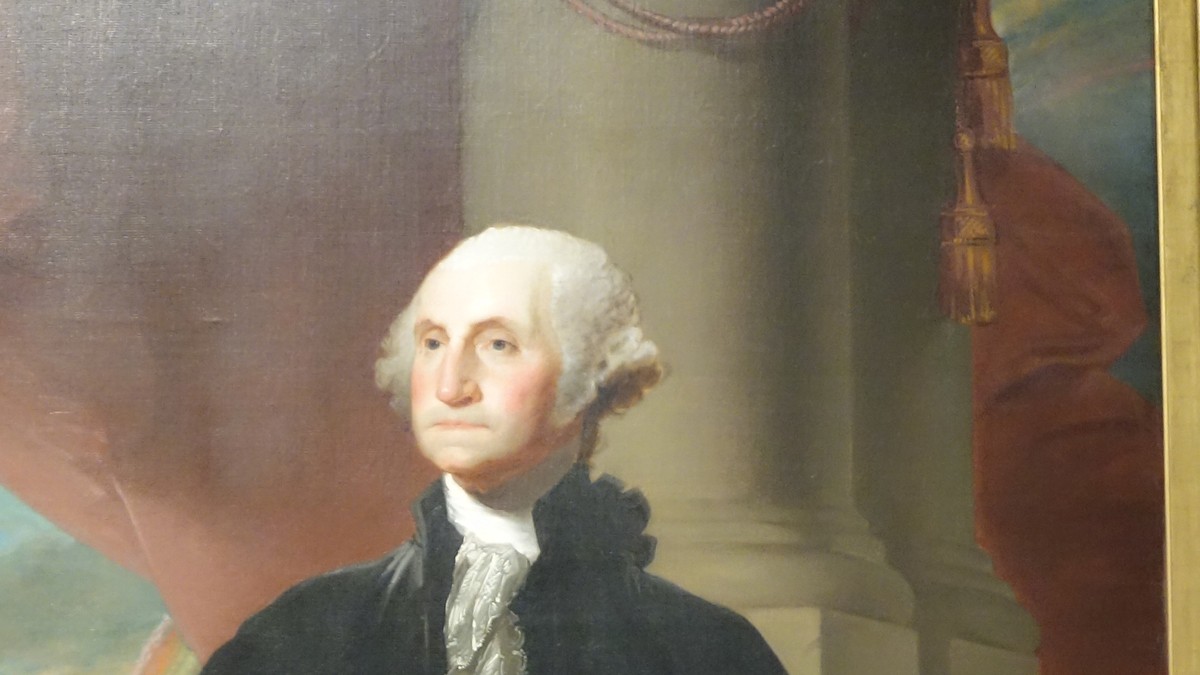
The order is four words long, and it sits in the middle of a letter about plaster of Paris.
On December 16, 1792, George Washington wrote from Philadelphia to Anthony Whitting, the man running Mount Vernon in his absence. The letter is ordinary estate business almost the whole way through. Where to spread the gypsum, and to do it on a still, damp day so the fine particles do not blow away. That the miller is grinding too little wheat and weighing it at 58 pounds a bushel, which is lower than anything Washington has heard of that year. That the carpenter Isaac burned down a workshop through carelessness. That a penny saved is a penny got.
Then the sheep.
“I am not less concerned to find that I am, forever, sustaining loss in my Stock of Sheep (particularly). I not only approve of your killing those Dogs which have been the occasion of the late loss, & of thinning the Plantations of others, but give it as a positive order, that after saying what dog, or dogs shall remain, if any negro presumes under any pretence whatsoever, to preserve, or bring one into the family, that he shall be severely punished, and the dog hanged.”
He goes on to explain why. “It is not for any good purpose Negros raise, or keep dogs; but to aid them in their night robberies; for it is astonish to see the command under which their dogs are.”
That last clause is the one worth sitting with. The complaint is not that the dogs were unruly. It is that they were well trained.
The next sentence complicates the reading, and it is usually cut. “I would no more allow the Overseers than I would the Negros, to keep Dogs — One, or at most two on a Plantation is enough.” The limit ran to the white men too. Washington expected to hear excuses about it and said in advance he would not accept them.
But the two halves of the order are not the same order. The overseer was told a number. The enslaved man was told that if he kept a dog he would be whipped for it, and that the reason he wanted one was theft. Only one of them had a motive assigned to him in writing by the President of the United States.
The letter is signed Go: Washington. He was in the fourth year of his first term.
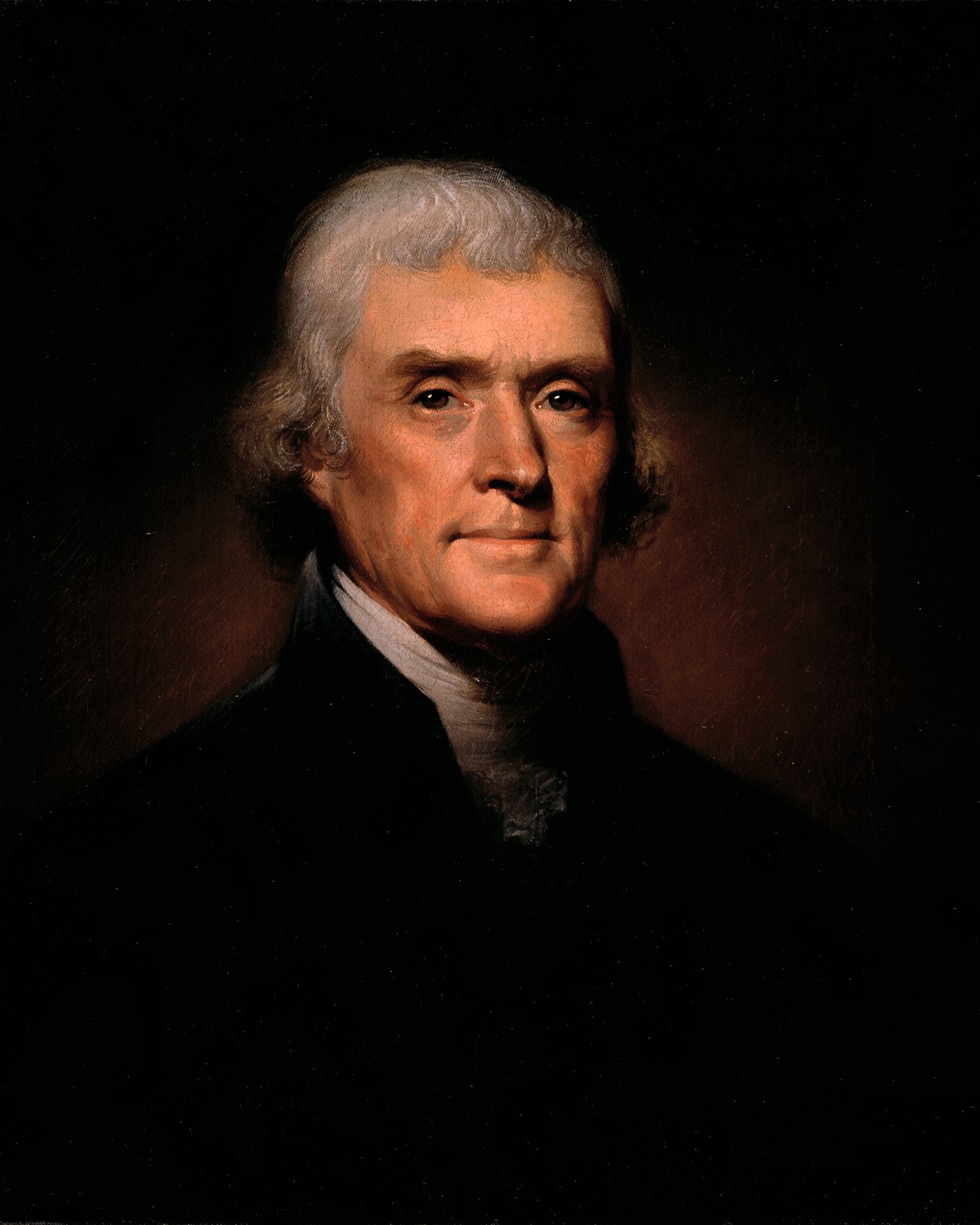
Sixteen years later and ninety miles southwest, Thomas Jefferson wrote his Monticello overseer Edmund Bacon on December 26, 1808. By then Jefferson was running large flocks on the mountain, and he had reached the same conclusion by a shorter route: to secure enough wool, the dogs belonging to the enslaved all had to be killed, and not a single one spared.
Jefferson disliked dogs generally, in a way that reads as almost comic until it stops being funny. Writing to Peter Minor in September 1811 he said he shared his correspondent’s hostility to the animals and would gladly join any plan for exterminating the whole race, calling them the most afflicting of all the follies for which men tax themselves. Since total extirpation could not be hoped for, he proposed a partial one — a tax, liability for the owner, and a collar carrying the name of whoever would answer for the dog’s conduct. In 1814 he told his Poplar Forest overseer to cut the dog population there to two if the Virginia tax passed.
The general contempt was real. It is also what makes the 1808 order legible. When the tax came up, Jefferson’s remedy was a collar and a name. When the dogs belonged to the people he owned, the remedy was to kill all of them.
Neither man invented the practice, and neither one was writing law. The law came right behind them.
Mississippi’s territorial code of 1805 authorized patrols and all other persons to kill any dog owned or kept by a slave. Maryland passed a bill in 1806 making it unlawful for any “negro or mulatto” in the state to keep a dog at all, unless he was free — and a free man was permitted exactly one, on a license renewed every year.
Read those two statutes next to the 1792 letter and the sequence is visible. A private order on one plantation, written into a farm-management letter between a paragraph on wheat and a paragraph on a rented house, becomes a patrol’s standing authority in one state and a licensing regime in another inside fourteen years.
The stated reason was always livestock. Sheep, in Washington’s letter. Wool, in Jefferson’s.
The reason planters kept writing it down anyway was that a dog did other things. A dog hunted, and a hunted rabbit is food that does not come out of the ration. A dog barked when someone came up the road at night, which is worth something if the people coming up the road at night are a patrol. A dog went with a man who was going somewhere.
Washington said it himself and did not appear to hear it. It is astonishing to see the command under which their dogs are.
Sources. George Washington to Anthony Whitting, 16 December 1792 (Founders Online, National Archives; original manuscript in the George Washington Papers, Library of Congress). Thomas Jefferson to Edmund Bacon, 26 December 1808 (Thomas Jefferson Papers, Huntington Library; transcription at Founders Online). Thomas Jefferson to Peter Minor, 24 September 1811, and to Jeremiah A. Goodman, 3 February 1814 (Founders Online). The Revised Code of the Laws of Mississippi, 1823, carrying the 1805 provision. Maryland Herald & Hagerstown Advertiser, 27 March 1807, reporting the 1806 act.